India · Education
Theme
Academic & Cultural Exchange · India–Japan

India's
Education
System

A sourced, visual guide for Japanese university students — exploring the world's largest education system and its growing ties with Japan. Created by Navneet Sadh. Teacher Training Student at Aichi University of Education 2026.

Created by Navneet Sadh. Teacher Training Student at Aichi University of Education 2026.

NEP 2020 1.4B Population India–Japan Partnership 22 Official Languages Ongoing Reform
Scroll
00 — Introduction

India & Japan: A Growing Academic Bond

India Japan academic exchange
🇮🇳 × 🇯🇵
Two nations. One shared belief — that education is the foundation of civilisation.
Japan and India have deepened academic and cultural ties since the 2008 Strategic and Global Partnership. Today, dozens of Japanese universities maintain exchange programmes with Indian counterparts, particularly in engineering, science, and the humanities. For Japanese university students, understanding India's education system is essential context for engaging with the world's most populous nation — a rising research powerhouse, and a key partner in technology, trade, and culture.
🤝
Did You Know?
As of 2023, over 30,000 Indian students study in Japan — the fastest-growing international student group in the country. Japanese universities increasingly target IIT and IISc graduates for joint PhD programmes. (Source: JASSO 2023)
01 — Overview & Scale

A System Unlike Any Other

India's education system is federally governed — national policy set centrally, delivery managed by 28 states and 8 Union Territories. Outcomes vary sharply by region, language, and funding level.

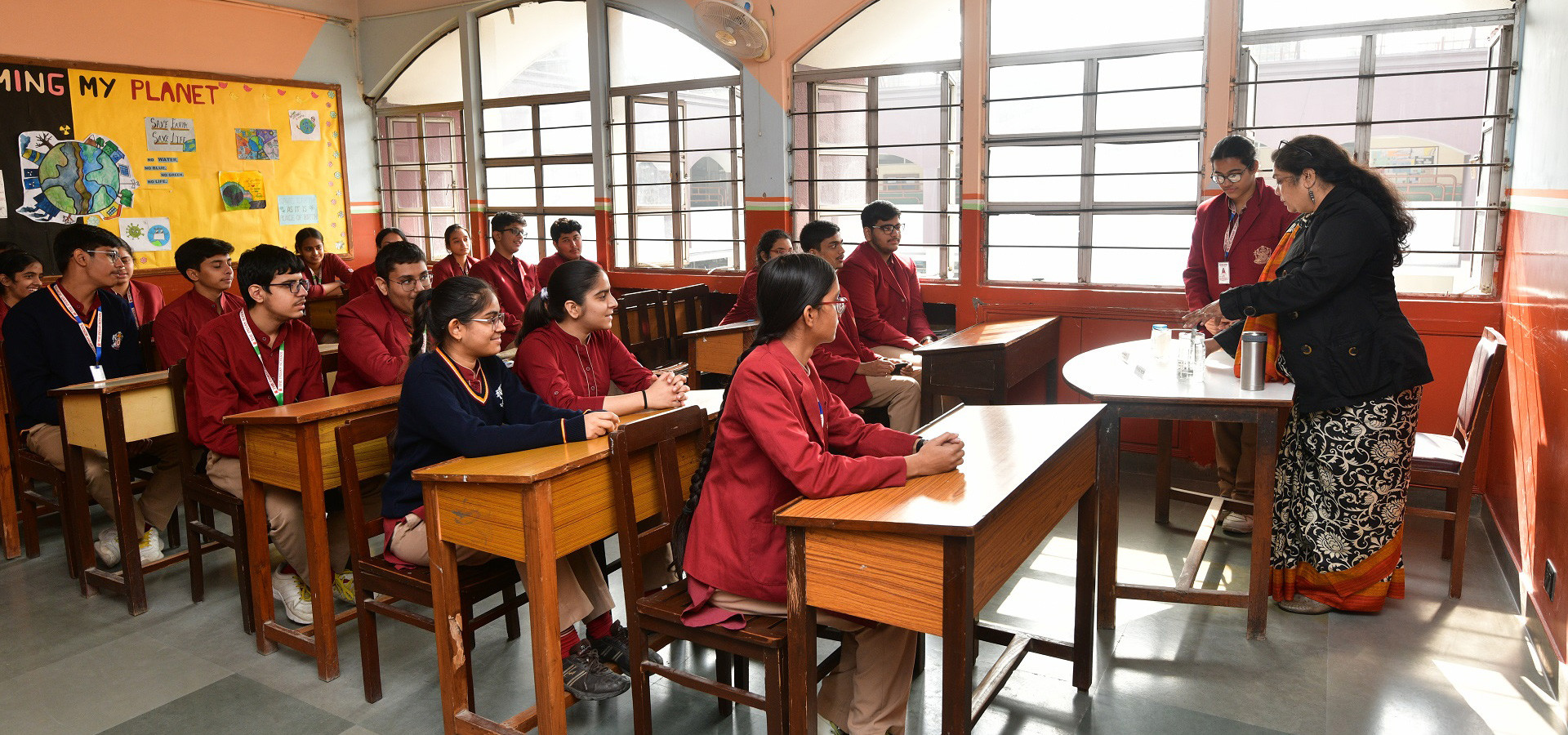
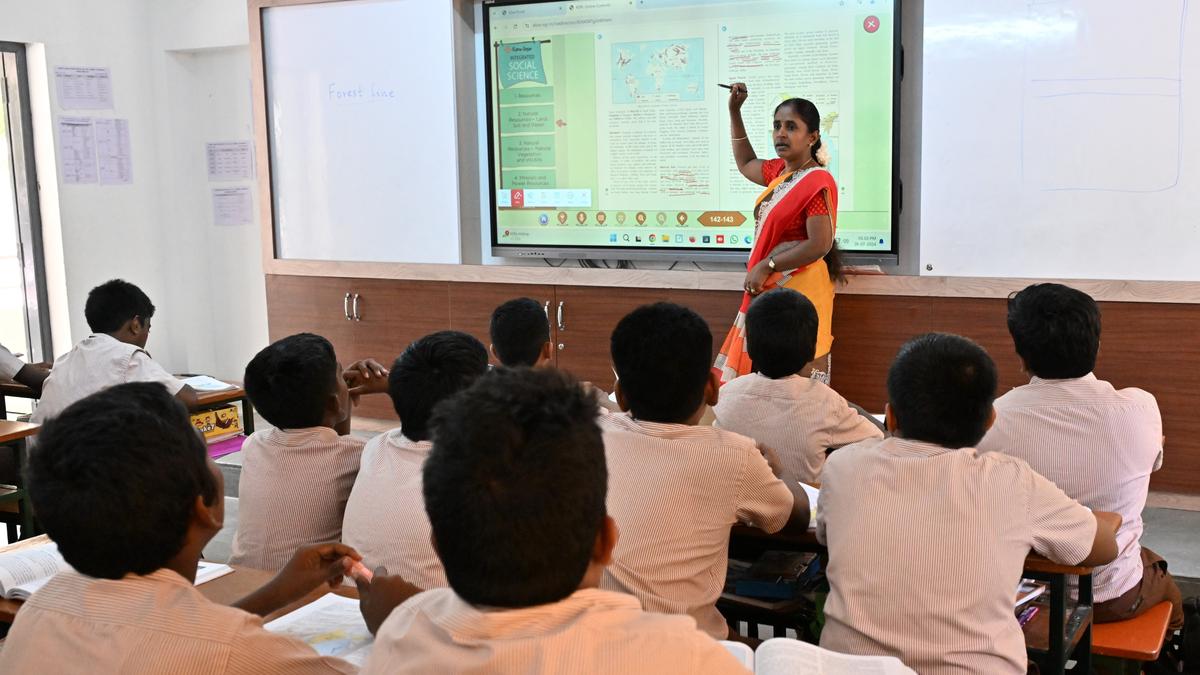
Indian students classroom
1.47M+
Schools nationwide
UDISE+ 2022–23
248M+
School students enrolled
UDISE+ 2022–23
43.3M
Higher education enrolment
AISHE 2021–22
🇮🇳 India vs Japan 🇯🇵 — Education at a Glance
🇮🇳 India
248M+
UDISE+ 2022–23
3.5%
of GDP (est. combined) · World Bank 2022
1,113
AISHE 2021–22
~28%
GER (Higher Ed) · AISHE 2021–22
Metric
School students
Education spend
Universities
HE enrolment ratio
🇯🇵 Japan
13.2M
MEXT 2023
3.2%
of GDP · World Bank 2022
807
MEXT 2023
~65%
GER (Higher Ed) · MEXT 2023
📊
Did You Know?
India's school student population (248M+) is nearly 19× that of Japan (13.2M) — yet Japan's higher education enrolment ratio (65%) is more than double India's (28%), reflecting India's still-developing transition from school to university. (Sources: UDISE+ 2022–23, MEXT 2023)
02 — Structure & NEP 2020

The New 5+3+3+4 Framework

NEP 2020 replaced the 1986 National Policy on Education, introducing a four-stage model with strong emphasis on early childhood, mother-tongue instruction, and vocational integration from Grade 6.

National Education Policy 2020 · MoE India
School Education Structure
5
Ages 3–8
Foundational
ECCE + Grades 1–2
3
Ages 8–11
Preparatory
Grades 3–5
3
Ages 11–14
Middle
Grades 6–8
4
Ages 14–18
Secondary
Grades 9–12
5+3+3+4=15 Years of Schooling
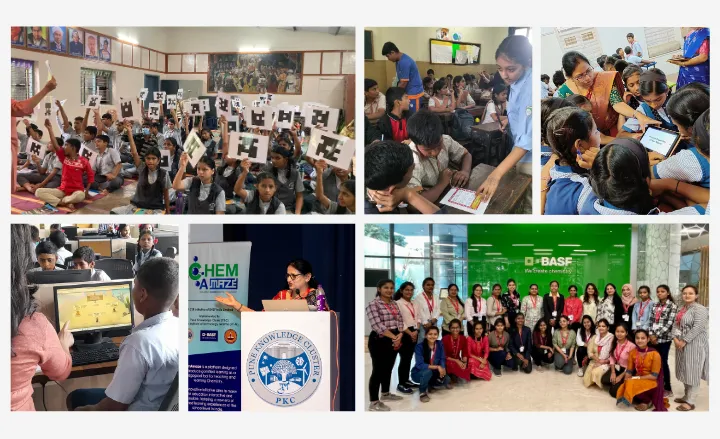
Children learning India
Key NEP 2020 Shifts 10+2 → 5+3+3+4 structure Mother-tongue instruction Gr. 1–5 Vocational integration from Gr. 6 Formative over exam-only assessment Multidisciplinary HE degrees Source: MoE India, NEP 2020 Document
💡
Did You Know?
India's NEP 2020 shares a striking philosophical parallel with Japan's 1947 Fundamental Law of Education — both emphasise holistic development and moving away from rote-learning toward applied thinking. Both countries are reforming simultaneously, creating a natural basis for pedagogical exchange.
03 — Types of Schools

Public, Private & Multiple Boards

India's school landscape is pluralistic — government, private aided, and private unaided schools coexist across different examination boards: CBSE, ICSE, state boards, and international curricula (IB, Cambridge).

School Governance — Share of Total Schools
Government / State-run
72%
Private Unaided
24%
Private Aided
4%
Source: UDISE+ 2022–23 · Central govt. schools (KV/NV) included within government. Figures rounded.
School campus India
🏫
Did You Know?
Although private unaided schools are only ~24% of institutions by count, they enrol a disproportionately high share of students in urban areas — reflecting a deep urban–rural divide in perceived quality and parental school choice. (Source: UDISE+ 2022–23)
04 — Exams & Assessment

High-Stakes Gateways

India's assessment pathway combines critical board exams at Grades 10 and 12 with fiercely competitive national entrance exams — giving rise to a multi-billion rupee private coaching industry.

10
Grade 10
First Board Exam
Determines stream: Science, Commerce, or Arts for Grades 11–12.
12
Grade 12
Final Board Exam
Critical gateway for undergraduate admissions alongside entrance tests.
J
JEE
Engineering Entry
~1.2M candidates for IITs, NITs, IIITs combined. IIT seats alone ~17,000. Under 1% acceptance. (NTA JEE 2023)
N
NEET
Medical Entry
~2M candidates annually for MBBS across public and private medical colleges. (NTA NEET 2023)
~1.2M
JEE candidates / year
NTA JEE Main 2023
~2M
NEET candidates / year
NTA NEET-UG 2023
<1%
IIT acceptance rate (IIT seats ~17,000 only)
JoSAA 2023 · IIT seats only, not all JEE seats
📝
Did You Know?
The city of Kota, Rajasthan has built an entire economy around JEE/NEET coaching — hosting over 200,000 students annually in dedicated study hostels. Coaching centres generate an estimated ₹5,000 crore/year (~¥90B). It is arguably India's most unique education ecosystem. (Source: CII Education Report 2022)
05 — Higher Education

A Vast, Uneven University System

India's higher education sector is the world's third largest by enrolment. NEP 2020 introduces multidisciplinary degrees, multiple entry/exit points with stacked credits, and encourages international collaboration — adoption varies widely.

1,113 UNIVERSITIES
State Universities ~40%
Private / Deemed ~35%
Central Universities ~10%
Specialized / Professional ~15%
AISHE 2021–22 · UGC 2023
From School to Career — The Graduate Pathway
School students (~248M · UDISE+ 2022–23)
Grade 12 completers (~14M/year · MoE est.)
Higher education (~43M enrolled · AISHE 2021–22)
Annual graduates (~9.5M est. · AISHE 2021–22)
Industry-ready graduates (est. 45–50% · NASSCOM 2023)
IIT / IIM / IISc — Elite tier
Engineering Medicine IT / Software Business / MBA Research Design
University campus India
🎓
Did You Know?
IIT graduates are among the most sought-after internationally. Multiple Japanese corporations — including Sony, Hitachi, and Fujitsu — have active IIT recruitment partnerships. IIT Delhi and IIT Bombay both appear in the QS World University Rankings top 150 (QS 2024).
06 — Inclusion & Rights

RTE, Reservation & the Mid-Day Meal

Two major policy instruments address historical inequity: the Right to Education Act (free schooling ages 6–14) and quota reservation in public institutions for historically disadvantaged groups.

15%
Scheduled Castes (SC)
Reserved seats in centrally-funded institutions for historically marginalised caste groups.
Art. 15 & 16, Constitution of India, 1950
7.5%
Scheduled Tribes (ST)
Seats for indigenous tribal communities to improve higher education access.
Art. 15 & 16, Constitution of India, 1950
27%
Other Backward Classes (OBC)
Largest quota group. EWS quota (10%) added separately in 2019 via 103rd Amendment.
Mandal Commission · 93rd Amendment 2005
118M+
Children fed daily (PM POSHAN / Mid-Day Meal)
MoE India 2022–23
49.5%
Total reservation in central institutions (SC+ST+OBC+EWS)
MoE India · Supreme Court 50% cap (Indra Sawhney 1992)
6–14
Age: free compulsory education (RTE Act 2009)
Right to Education Act, 2009
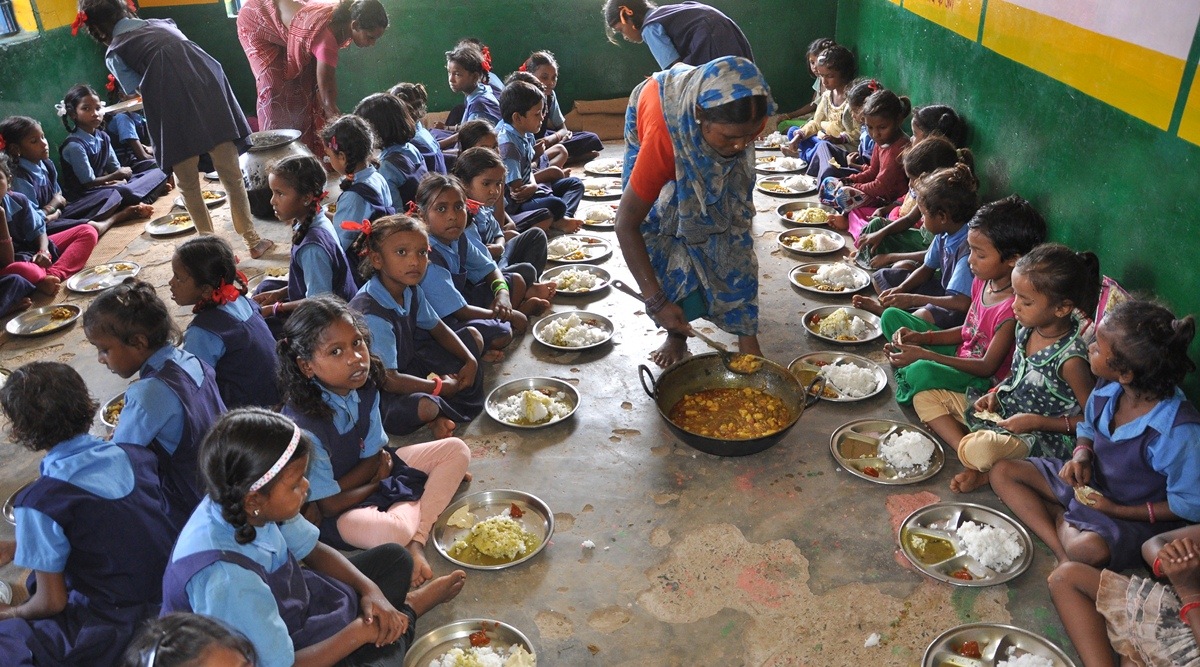
Children school India
🍱
Did You Know?
India's Mid-Day Meal scheme (now PM POSHAN) feeds more children every school day than Japan's entire population. A World Bank study (2020) links it to a 10–15% improvement in school attendance in rural areas — making it one of the most cost-effective education interventions globally.
07 — Scale & Languages

A Multilingual Education Reality

India's 22 officially scheduled languages and 700+ dialects shape every dimension of curriculum design, assessment, and outcomes. NEP 2020 mandates mother-tongue instruction in early grades wherever feasible.

9.4M+
Teachers (school level)
UDISE+ 2022–23
22
Scheduled languages (8th Schedule, Constitution)
Constitution of India
700+
Languages & dialects spoken
People's Linguistic Survey of India, 2013
Language Families Indo-Aryan Hindi, Bengali, Marathi… Dravidian Tamil, Telugu… Austroasiatic Santali, Munda… Sino-Tibetan Manipuri, Bodo… Schematic only — not geographic
Language Families in Indian Education
Indo-Aryan (Hindi, Bengali, Marathi…)~75%
Dravidian (Tamil, Telugu, Kannada…)~20%
Austroasiatic (Santali, Munda…)~1%
Sino-Tibetan (Manipuri, Bodo…)~1%
People's Linguistic Survey of India, 2013
NEP 2020 Directive · MoE India
Mother-tongue or home-language instruction in Grades 1–5 wherever feasible — citing evidence that foundational concepts are better retained in familiar languages.
🗣️
Did You Know?
India produces the largest number of English-proficient STEM graduates outside the Anglosphere — a key reason why Japanese tech companies increasingly recruit from Indian universities. English-medium instruction is prevalent in urban private schools across all states, giving Indian graduates a significant international communication advantage.
08 — Persistent Challenges

Access ≠ Outcomes

Despite record enrolment, critical gaps persist in learning outcomes, infrastructure, teacher quality, and digital access — disproportionately affecting rural and low-income learners.

📚
Learning Outcomes Gap
Only 42.8% of rural Grade 5 students can read a Grade 2-level text. Foundational literacy crisis persists despite enrolment gains. (ASER 2022)
🏫
Infrastructure Gaps
~35% of govt. schools lack functioning libraries; ~6% of rural schools lack electricity. Internet in schools varies widely by state. (UDISE+ 2022–23)
👩‍🏫
Teacher Capacity
~12% of government school teachers are untrained. Pupil-teacher ratios range from 10:1 to 40:1+ across states. (UDISE+ 2022–23)
💰
Financing Constraints
Public education spend: 2.9–3.8% of GDP depending on method and year vs NEP target of 6%. (World Bank 2022, MoE)
💻
Digital Divide
Rural household internet use ~31% vs urban ~67%. COVID-19 school closures exposed severe device and connectivity gaps. (NFHS-5, 2019–21)
🎓
Employability Gap
Only 45–50% of engineering graduates assessed as industry-ready. Soft skills and applied competence remain key shortfalls. (NASSCOM 2023)
📉
Did You Know?
ASER 2022 found that foundational reading levels among rural Grade 5 students had declined compared to pre-COVID baselines — reversing years of hard-won progress. Post-pandemic learning recovery remains an urgent national priority for 2024–25. (Annual Status of Education Report 2022)
09 — Reforms & Digital Expansion

NEP 2020 & The EdTech Wave

NEP 2020 is India's most ambitious education reform since independence. COVID-19 sharply accelerated digital learning adoption — revealing both new opportunity and deep structural inequity in access.

MoE India, 2020

NEP 2020

Replaces 1986 National Policy. Covers ECCE reform, multidisciplinary HE, vocational integration, and holistic assessment overhaul across all levels.

MoE / DIKSHA, 2020–Present

EdTech & DIKSHA Platform

Govt. platform DIKSHA hosts 6,000+ e-content modules in 36 languages. COVID era saw ~3× growth. Private EdTech (BYJU's, Unacademy) expanded massively, then consolidated. (MoE 2022)

UGC / MoE, 2023

International Collaboration

NEP enables foreign university campuses in India and joint/dual degrees — a historic policy shift. Japanese universities are exploring partnerships under MEXT's Asia-Pacific exchange frameworks.

NAAC / NBA, Ongoing

Accreditation Reform

NAAC and NBA accreditation systems overhauled to incentivise research output, industry linkages, and international ranking performance.

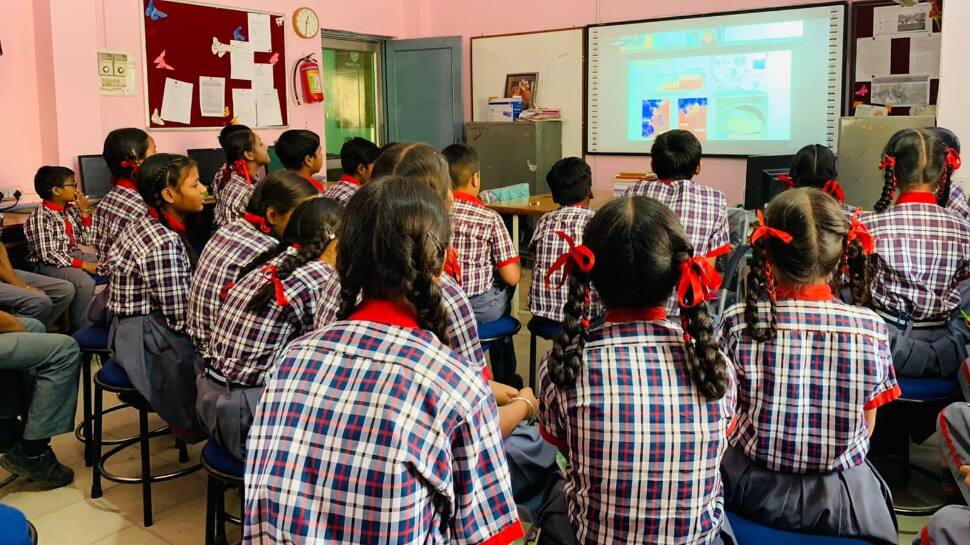
Students digital learning
🤖
Did You Know?
India's National AI for Education initiative (under NEP 2020) aims to use AI for personalised learning and dropout prediction in rural schools. Japan's MEXT has a parallel AI-in-Education framework — creating a natural area for bilateral EdTech research collaboration between the two countries.
10 — Conclusion

Ambition Meets Reality

India's education system is simultaneously one of the world's great policy experiments and one of its most complex, unresolved challenges. To engage with India academically is to engage with this duality directly — and honestly.

India combines ambitious reform (NEP 2020), extraordinary scale, and growing institutional excellence — with persistent equity gaps, uneven implementation, and financing shortfalls. Outcomes remain deeply variable by state, school type, language, and income. For Japanese students and researchers, India represents both a vital academic partner and a compelling lens through which to examine the universal tensions between access, quality, and reform.
Sources: UDISE+ 2022–23 · AISHE 2021–22 · ASER 2022 · MoE India · World Bank 2022 · NASSCOM 2023 · NFHS-5 · NEP 2020 · MEXT 2023 · JASSO 2023
Strengths
World-class IITs, IIMs & IISc — rising in global rankings (QS 2024)
Largest English-proficient STEM graduate pool outside the Anglosphere
NEP 2020 — most comprehensive reform agenda in 35 years (MoE India)
Rapidly expanding EdTech ecosystem and digital infrastructure
Growing India–Japan academic exchange (JASSO 2023; MEXT frameworks)
⚠️ Unresolved Challenges
Foundational literacy crisis in rural areas: 42.8% Gr.5 reading rate (ASER 2022)
Education spend 3.5% of GDP vs NEP target 6% (World Bank 2022)
Wide urban–rural divide in infrastructure, teacher quality, digital access
Uneven NEP implementation across 28 states — reform on paper vs practice
Only ~45–50% of graduates industry-ready (NASSCOM 2023)
Me at Classroom
🌏
For Japanese Students — Next Steps
Considering research exchange or graduate study in India? IIT Delhi, IISc Bangalore, and IIT Bombay all have active partnerships with Japanese universities under MEXT's Asia-Pacific frameworks. JASSO scholarships apply for short-term study in India. The India–Japan Academic Network (IJAN) connects faculty and students across both countries.